
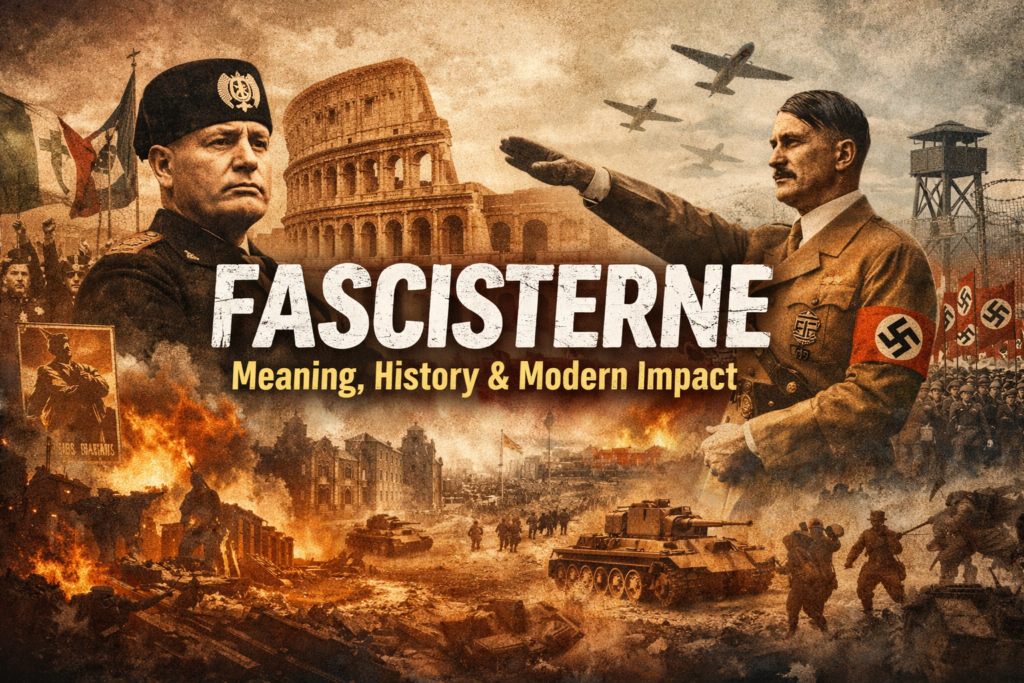

The word fascisterne has gained attention in political discussions, history books, documentaries, and online debates. Many people search for the meaning of fascisterne because they want to understand its historical background, political significance, and why it still appears in modern conversations. Although the term comes from a specific period in European history, its influence continues to shape discussions about politics, nationalism, freedom, and democracy today.
Understanding fascisterne is important because the word is connected to one of the most controversial political ideologies in modern history. It represents more than just a political label. It reflects historical movements, authoritarian governments, and social changes that affected millions of people around the world. Learning about fascisterne helps readers understand how political systems rise, how propaganda influences society, and why historical awareness matters in modern times.
What Does Fascisterne Mean?
The term fascisterne is a Danish word that translates to “the fascists” in English. It is mainly used when discussing fascism, political extremism, authoritarian governments, and nationalist movements. The word is often connected to the political systems that emerged in Europe during the early twentieth century.
Historically, fascisterne referred to supporters of fascist ideology. These groups believed in strong centralized power, strict national identity, and the idea that the state should control many parts of society. Fascist governments often rejected democratic systems and limited political opposition. Because of this history, the word fascisterne carries strong political and emotional meaning in modern discussions.
Today, people may use fascisterne in historical education, political debates, media discussions, and cultural analysis. The term is still widely searched because many readers want to understand its origins and its connection to world history.
The Historical Origins of Fascisterne
The history of fascisterne begins after World War I, a period when Europe faced economic instability, unemployment, social unrest, and political tension. During this difficult time, several political movements promised strong leadership and national unity. Fascism became one of those movements.
Italy played a major role in the rise of fascism under the leadership of Benito Mussolini. His political movement focused on nationalism, military strength, and centralized authority. Over time, similar ideas spread across Europe and influenced other governments and political organizations.
The rise of fascisterne was connected to public fear, economic hardship, and political frustration. Many citizens wanted stability after years of war and crisis. Fascist leaders used speeches, propaganda, and national pride to gain support. They presented themselves as protectors of the nation while limiting freedom of speech and political opposition.
As fascist movements expanded, they became associated with aggressive nationalism and authoritarian rule. This historical period eventually contributed to major conflicts that shaped the twentieth century.
Fascisterne and World War II
One of the most important reasons people study fascisterne is because of its connection to World War II. Fascist governments became heavily involved in military expansion, territorial conflicts, and political alliances that changed world history forever.
During the war, fascist regimes promoted extreme nationalism and strict government control. These systems often relied on censorship, propaganda, and suppression of political opponents. Many countries experienced fear, violence, and loss during this period.
The role of fascisterne in World War II is frequently discussed in schools, documentaries, and historical research because it serves as a warning about the dangers of authoritarian power. Historians continue to study how these political movements gained influence and how societies responded to them.
Even decades later, discussions about fascisterne remain important because they help modern generations understand the consequences of political extremism and intolerance.
Main Beliefs Associated With Fascisterne
The ideology connected to fascisterne included several core beliefs that defined fascist movements throughout history. Although different groups had unique political goals, many shared similar principles.
One important belief was extreme nationalism. Fascist movements promoted the idea that the nation should come before individual interests. National identity was often presented as the highest priority.
Another common belief was authoritarian leadership. Fascist governments usually supported one powerful leader who controlled political decisions and national direction. Opposition parties and criticism were often restricted.
Militarism also played a major role. Fascist systems valued military power, discipline, and national strength. Propaganda was frequently used to influence public opinion and create loyalty toward the government.
The ideology of fascisterne also rejected many democratic principles. Free elections, political diversity, and open criticism were often limited or removed entirely. Because of these beliefs, fascism became one of the most controversial political systems in modern history.
Why Fascisterne Still Matters Today
Although fascist governments from the twentieth century no longer dominate Europe, the word fascisterne still appears in political discussions around the world. Modern debates about nationalism, authoritarian behavior, political extremism, and freedom of speech sometimes include references to fascist ideology.
Many people use the term when discussing modern political movements that appear aggressive, anti-democratic, or highly nationalist. However, historians often warn that the term should be used carefully because of its serious historical meaning.
The continued interest in fascisterne also reflects growing public awareness about political systems and historical education. Younger generations frequently search for information about fascism to better understand current world events and political debates.
Media platforms, online discussions, and educational content have all contributed to renewed interest in the history and meaning of fascisterne. This is why the keyword continues to attract attention in search engines and informational blogs.
The Role of Propaganda in Fascisterne
Propaganda played a major role in the success of fascist movements. Governments connected to fascisterne used newspapers, speeches, posters, radio broadcasts, and public events to shape public opinion and control information.
The goal of propaganda was to create loyalty, unity, and emotional support for the government. Political leaders often presented themselves as national heroes while portraying opponents as threats to society.
This control of information helped fascist regimes maintain power for long periods. Citizens were encouraged to follow government ideology and avoid criticism. In many cases, freedom of speech and independent journalism became limited.
Studying propaganda connected to fascisterne helps modern readers understand how media influence can affect public thinking. It also explains why critical thinking and open access to information remain important in democratic societies today.
Fascisterne in Modern Culture and Media
Modern films, books, documentaries, and online discussions frequently explore themes related to fascisterne. Historical dramas often examine how fascist governments rose to power and how ordinary people experienced life during those periods.
Educational platforms also discuss fascism to help audiences understand political history and human rights issues. Because of this, the term fascisterne continues to appear in academic studies, journalism, and public conversation.
Social media has also increased interest in historical political topics. Many users search for explanations of fascisterne after hearing the term in debates, interviews, or news reports. As a result, educational content about fascism remains highly relevant online.
Understanding the history behind fascisterne allows readers to separate historical facts from misinformation and emotional political arguments.
Conclusion
The term fascisterne carries deep historical and political significance. It represents a period in history shaped by authoritarian governments, nationalism, propaganda, and global conflict. From its origins in early twentieth-century Europe to its continued presence in modern political discussions, fascisterne remains an important topic for historical education and public awareness.
Learning about fascisterne helps readers understand how political systems influence society and why democracy, freedom of speech, and critical thinking matter. The history connected to fascism continues to serve as a reminder of the dangers of unchecked political power and intolerance.
As interest in political history grows online, many readers continue searching for clear and informative explanations about fascisterne. Understanding the past remains one of the best ways to build awareness for the future.
FAQs
What does fascisterne mean?
Fascisterne is a Danish word meaning “the fascists.” It is used in discussions about fascism, politics, and historical movements.
Why is fascisterne historically important?
The term is connected to fascist governments and political movements that influenced Europe during the twentieth century and World War II.
Is fascisterne still used today?
Yes, the word still appears in political debates, historical discussions, media content, and educational research.
What beliefs were linked to fascisterne?
Common beliefs included nationalism, authoritarian leadership, militarism, and opposition to democratic systems.
Why do people study fascisterne today?
People study fascisterne to understand history, political ideology, propaganda, and the impact of authoritarian governments on society.